
US President Donald Trump has threatened the European Union with "very heavy tariffs" if he perceives their actions as hostile, specifically in response to Canada's efforts to deepen economic and strategic ties with the EU. This comes as European Commission President Ursula von der Leyen invited Canada to become the EU's first "associate member" to strengthen resilience amid global trade uncertainties and US trade policies.

New photographic evidence and a Pentagon inspector general's report confirm extensive damage to US military installations across the Middle East due to Iranian missile and drone strikes. The report details billions in financial costs, structural losses to hundreds of buildings, and damage to dozens of aircraft, contradicting previous assertions about US military readiness and ordnance stockpiles. The conflict also led to disruptions in the Strait of Hormuz, impacting global oil prices.
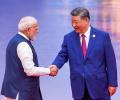
Ahead of Xi Jinping's visit, National Security Advisor Ajit Doval and Chinese Foreign Minister Wang Yi held extensive talks in Beijing on August 25 on the boundary issue and reached an eight-point consensus.

Celebrations marking India's 80th Independence Day in the New York tri-state area culminated in a world record, with more than 1,300 US flags surrounded by Indian tricolours arranged to form the number "250", in a tribute to America's semiquincentennial anniversary.
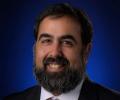
Amit Kshatriya, a decorated Indian-American and NASA veteran, has been appointed as NASA's new associate administrator, marking a significant step in the agency's exploration efforts.

India is significantly expanding its crude oil sourcing to Latin America, with Venezuela emerging as a major supplier, as geopolitical disruptions in the Middle East and the Strait of Hormuz compel the world's third-largest oil consumer to diversify its energy supplies.

Congress leader Sonia Gandhi is set to release her memoir, "Belonging: A Journey of Love," in November. The book will cover her personal life, including her marriage to Rajiv Gandhi, the tragedies she faced, her decision to decline the prime ministership in 2004, and her journey into politics. It promises an intimate look at her experiences within one of India's most powerful political families.

As India's decline continued on global indices, the government first blamed methodology and then motives. This is where we remain today as we wish each other and ourselves a happy Independence Day, points out Aakar Patel.

Legendary economist and former Federal Reserve chairman Alan Greenspan has died at the age of 100 due to complications related to Parkinson's disease, his wife Andrea Mitchell confirmed.

Immigrants' contribution to the US economy is disproportionate to their share of the population, meaning that losing them would shrink the economy even more than losing a random group of Americans, points out Sree Sreenivasan.

Satyan Gajwani, chairman of Times Internet Limited and RCB's new co-owner, discusses the significance of American companies investing in IPL franchises like RCB and Rajasthan Royals, highlighting the league's immense growth potential and global appeal.

'The situation globally is quite challenging, but we have the confidence and courage of conviction that we will come out winners even in this challenging time.'

American industry groups sought punitive tariffs on Indian goods at USTR hearings, while Indian officials defended the country's manufacturing growth as demand-led and WTO-compliant.

The BRICS foreign ministers' meeting in New Delhi concluded without a joint statement due to disagreements over the West Asia conflict, with Iran blaming the UAE for the lack of consensus. India, as the host, issued a chair's statement highlighting the differing views.

This could come as a setback to thousands of Indian engineers who have waited for years for their work visas to pave the way for the coveted Green Card.

The US has seized an oil tanker, 'Skywave', linked to Iran in the Indian Ocean, as part of efforts to disrupt Iran's oil shipments and enforce sanctions. The vessel was part of a network transporting sanctioned Iranian crude oil, with the seizure occurring amid heightened tensions between Washington and Tehran.

The family of Savitha Shanmugasundaram, an Indian-origin student killed in a shooting in Austin, has launched a one-million-dollar scholarship in her memory to support students from low-income families.

Dr Subhash Kashyap not only enhanced Parliament's image in India and abroad, but also the position of Lok Sabha secretary-general which succeeding secretary-generals have upheld thorough neutrality, objectivity and high degree of professionalism, notes Rup Narayan Das.

The popularity of US President Donald Trump is waning with approval ratings at its lowest, according to former diplomat Mahesh Sachdev, who notes that with two-thirds of Americans not approving of a continuation of the war on Iran, Trump faces the risk of being impeached.

The United States is facing growing discontent from its Gulf allies after several countries in the region complained that they were not given advance notice of the US-Israel strike on Iran that triggered widespread retaliatory attacks, according to media reports.

'We were in a heavily nuclearised environment. China had tested for Pakistan in the 1980s and helped their missile programme stay just one step behind us.'

The intriguing bit is that Trump is likely to attend the talks in Islamabad this weekend -- if he does, it will be the clearest signal yet that the US is ready to exit the war with some sort of win to show, since he cannot afford to go for the talks and return empty-handed, notes Prem Panicker in his must read blog on the Iran War

'Was the five-day pause ever meant to hold, or was it simply another instrument of signaling, of positioning, of buying time in a war where even the pauses are tactical?' asks Prem Panicker in his must read daily blog on the Gulf War.

The 'rescue' operation occurred within kilometres of Iran's underground tunnel complex at Isfahan, assessed by the IAEA and US intelligence as holding a substantial portion of the country's 60 per cent enriched uranium stockpile. Retired senior US military officers have highlighted that the mission's footprint -- hundreds of special operators, multiple heavy-lift aircraft deep inside Iran -- appears outsized for recovering a single airman. Prem Panicker continues his must read blog on the Iran War.

For weeks, the war skirted the edge of catastrophe without tipping over. Missiles flew, there was much destruction, commanders were assassinated, cities across the Gulf and even in Israel struggled to absorb the shock. But one line held: Energy infrastructure, the arteries of the global economy, remained largely untouched. That is no longer true. Prem Panicker continues his must read daily blog on the Gulf War.

Fight on toward goals that keep receding, or exit with most objectives unmet. Trump is agitated, his poll numbers falling below the Plimsoll line, his base fractured between those who back the war and those who remember that he campaigned on ending them.

Israel has for more than two decades and several US presidencies worked to draw the United States into a full-scale war with Iran. Having finally achieved that, the last thing it wants is Trump declaring victory and going home, as he is prone to do. Ali Larijani was the figure most capable of handing Trump a negotiated exit with something to show for it. Without Larijani, the road to an exit gets considerably narrower. Prem Panicker continues his must read daily blog on the Gulf War.

When missiles fly in this region, they are never just aimed at military targets.

What we are watching is something different: A fog manufactured and maintained by the people who started the war, so that the question of why it was started never has to be answered, observes Prem Panicker in his must read blog on the war in the Middle East.

The US government, under President Trump, justifies the intervention as a security necessity rather than a resource grab. The primary official reasons include: narco-terrorism charges, national security and migration crisis.
The Union Budget backs skilling across animation, gaming and comics. But creators and studios confront a hard question: who owns what comes next?
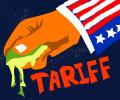
A trade deal makes sense only if it is fair and reciprocal. If the cost is strategic dependence or loss of policy space, waiting is the wiser option, asserts Ajay Srivastava.

US President-elect Donald Trump has nominated Indian-American scientist Jay Bhattacharya to lead the National Institutes of Health (NIH), the country's top health research and funding institutions. Bhattacharya, a professor of Health Policy at Stanford University, is known for his research on the health and well-being of vulnerable populations. Trump also nominated Jim O'Neill as the deputy secretary of Health and Human Services to work alongside Robert F. Kennedy Jr.

Long before he became Venezuela's president, Nicolas Maduro's life intersected with India in a profound personal way.
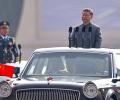
'For the first time in a hundred years, the army has been taken out of the political equation. And for the first time ever, there is only one man who calls the shots. Not even Mao had this kind of power.'
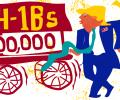
'As one of many immigrants at Nvidia, I know the opportunities we've found in America have profoundly shaped our lives.'
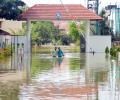
Bengaluru is at a critical juncture, where its economic model, reliant on attracting and retaining skilled professionals, is directly threatened by a measurable decline in urban quality of life, point out Shishir Gupta and Rishita Sachdeva.
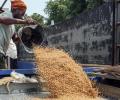
Very sensitive items -- such as apples, which carry political weight and are closely tied to farmer interests in states like Himachal Pradesh and Uttarakhand -- may face restricted concessions.
The fact that Gor has President Trump's ear makes him an extremely valuable commodity for India -- he represents both a challenge and an opportunity, points out Aditi Phadnis.

The stock and bond markets told Trump firmly that any idea of isolating China would lead to harming the US economy and this forced Trump to backtrack, points out Aakar Patel.
